
But at that time when you did not know God, you were enslaved to the things which by nature are not gods. But now, because you have come to know God, or rather have come to be known by God, how can you turn back again to the weak and miserable elemental spirits? Do you want to be enslaved to them all over again? You carefully observe days and months and seasons and years. I am afraid for you, lest perhaps I have labored for you in vain!
Galatians 4:8–11 (LEB)
Many people in Christianity use Paul’s writings to preach against the commandments of God. When it comes to keeping the Sabbath, Passover or Pentecost, denominations of Christianity will quote Paul’s letter to the Galatians, claiming he is speaking out about Sabbaths and feast days, when he is really speaking about “times” observed by the false religions of the nations.
Galatians 4:8–11 (KJV 1900): 8 Howbeit then, when ye knew not God, ye did service unto them which by nature are no gods. 9 But now, after that ye have known God, or rather are known of God, how turn ye again to the weak and beggarly elements, whereunto ye desire again to be in bondage? 10 Ye observe days, and months, and times, and years. 11 I am afraid of you, lest I have bestowed upon you labour in vain.
Commentary after commentary will claim this is speaking about the Sabbaths and feast days of God. They will reason that the Sabbaths and feast days God instituted were “weak and beggarly elements”. I completely disagree. For one, the people of Galatia were not formerly observing God’s Sabbaths and feast days. They were serving Greek deities and religious rites. We have this account in Acts where Paul is in Lystra, a city of the province of Galatia and they think he is the Greek god Hermes. This is the type of behaviour that Paul is lamenting about, hoping his efforts had not been in vain. Why do people think this is about these Greek Zeus worshippers keeping the Sabbath of the one true God? It makes no sense.
Acts 14:8–13 (LEB): 8 And in Lystra a certain man was sitting powerless in his feet, lame from birth, who had never walked. 9 This man listened while Paul was speaking. Paul, looking intently at him and seeing that he had faith to be healed, 10 said with a loud voice, “Stand upright on your feet!” And he leaped up and began walking. 11 And when the crowds saw what Paul had done, they raised their voices in the Lycaonian language, saying, “The gods have become like men and have come down to us!” 12 And they began calling Barnabas Zeus and Paul Hermes, because he was the principal speaker. 13 And the priest of the temple of Zeus that was just outside the city brought bulls and garlands to the gates and was wanting to offer sacrifice, along with the crowds.
The Galatians were not returning to the one true God’s holy days as modern scholars like to claim. They were steeped in the “beggarly elements”, being vain philosophies, superstitions and the “times” of the pagan deities.
Paul also kept the feasts and Sabbaths of God, so why would he be condemning the Galatians for doing the same? Paul wanted to be in Jerusalem for the feast of Shavuot, called Pentecost from the Greek language.
Acts 20:16 (LEB): 16 For Paul had decided to sail past Ephesus so that he would not be having to spend time in Asia. For he was hurrying if it could be possible for him to be in Jerusalem on the day of Pentecost.
How does Paul tell us to keep the feasts? Does he tell us to put groves of Christmas trees on the altars of our churches and to paint eggs at Easter to honour Jesus? No, these are actually the weak and beggarly elements used by the religions to whom Paul was preaching. They didn’t call it a “Christmas tree” or “Easter egg” in the first century. We have adopted the symbols of these religions and foolishly incorporated them into Christianity over hundreds of years. These are items that are “polluted by idols”, and the first things the early leaders said we need to abandon.
Acts 15:19–21 (LEB): 19 Therefore I conclude we should not cause difficulty for those from among the Gentiles who turn to God, 20 but we should write a letter to them to abstain from the pollution of idols and from sexual immorality and from what has been strangled and from blood. 21 For Moses has those who proclaim him in every city from ancient generations, because he is read aloud in the synagogues on every Sabbath.”
What is left of Christmas celebrations if we take away the evergreen trees, the lights and the presents? It is a well known fact by Christians, atheists, Satanists and modern Pagans that Jesus was not born on December 25th, so what are we really celebrating that day? The answer is we are celebrating one of the sacred days of sun god worship popular in every culture from antiquity. These are what the symbols we use represent, and the time of the winter solstice is the birthday of the sun god going all the way back to 2000 BCE. “You carefully observe days and months and seasons and years”.
Paul told us to observe the feasts in light of the Messiah. The feasts of God are still important, and point to Jesus. Christianity has returned to the weak and beggarly elements just as in Galatia. Paul warned Galatia, and instead of heeding Paul’s warning, the practices of the pagan religions were adopted by the church wholeheartedly.
1 Corinthians 5:7–8 (LEB): 7 Clean out the old leaven in order that you may be a new batch of dough, just as you are unleavened. For Christ our Passover has been sacrificed. 8 So then, let us celebrate the feast, not with the old leaven or with the leaven of wickedness and sinfulness, but with the unleavened bread of sincerity and truth.
Is Paul referring to the feast of Christmas or Easter when he says, “So then, let us celebrate the feast, not with the old leaven or with the leaven of wickedness and sinfulness, but with the unleavened bread of sincerity and truth.“? No, he is referring to Passover. We must celebrate in “truth”. There is no truth in the “beggarly elements”.
The Mishna is the oral instructions in Judaism handed down and preserved by having it written for future generations. I am only using this for historical purposes to show what would have been normal practices in the first century when Jesus and the apostles were engaged in their ministries.
“And these are the festivals of the gentiles: the Calends, 2 the Saturnalia, 3 the commemoration of empire, 4 the anniversaries of kings, and the day,· of [their] birth and the day of (their] death.“
These festivals, times and days are what Paul is talking to the Galatians about returning to celebrating, and these are the same sort of times the church is still celebrating today only with “Jesus flavouring” to lull the people into thinking they are doing something great for God by celebrating the same old worldly festivals that were well known to the first century Christians. Continuing in the Mishna:
“These things it is forbidden to sell to the gentiles :7 fir-cones, white figs with their stalks, frankincense, or a white cock. R. Judah says: One may sell a gentile a white cock among other cocks, or, if it is by itself, cut off its spur and sell it to him, because they do not sacrifice to an idol what is defective. All other things, if [any idolatrous use is] not specified, are permitted to be sold; but if (any idolatrous use is] specified, they are forbidden. R. Meir says: It is forbidden also to sell to gentiles fine dates, or Hazab or Nicolaus dates.“
Christmas is nothing more than a continuation of the Roman Saturnalia and Scandinavian Yule celebrations rolled into the false birthday celebration of Jesus. It is all fake and an abomination to God. When the church leaders give their list of instructions to new believers that include abstaining from things polluted by idols, this is in line with the list in the Mishna that includes fir cones. I find it interesting that two thousand years later we are still selling and buying fir cones for Saturnalia and Yule, calling it “Christmas” to somehow legitimize the festival as a Christian holiday.
I am not judging the people that want to celebrate these festivals at all. We shouldn’t; however, pretend that they have anything to do with Jesus. This is where the problem lies. We are mixing the gods of the world with the one true God, and He says not to do this.
Ezekiel 22:26–28 (LEB): 26 Its priests treat my law violently, and they profane my holy objects; they do not distinguish between a holy object and what is unholy, or between the clean and the unclean. They do not teach the difference, and they hide their eyes from my Sabbaths, and so I am profaned in the midst of them. 27 Its officials are like wolves tearing prey in its midst, to pour out blood, to destroy people, to make dishonest gain. 28 And for them its prophets plaster whitewash; they are seeing falseness and are practicing divination for them by lying, saying, ‘Thus says the Lord Yahweh,’ and Yahweh has not spoken.
The following is from the website https://en.subalternosblog.com/post/the-kalends-of-january-popular-culture-in-late-antiquity-1, a blog written by Lucy Grig, regarding the festival of Calends:
“Across this empire, in cities and towns and even in the countryside, bishops complained about the behaviour of their flocks at this time. What exactly were they complaining about? Much of the behaviour associated with the Kalends was precisely what we would expect from any festive revelry: eating, drinking, singing, dancing and carousing were all involved, as we would expect. Ritual practices clearly associated with the idea of the new year were attacked as ‘superstitious’ by clerics: for instance, in the town and countryside alike, people laid out food on tables aiming to secure abundance the year ahead. They also exchanged gifts known as strenae– ‘good luck presents’ (which can be compared with the sigillaria of Saturnalia), ranging from fruit decorated with tinsel to gold coins. These gifts were exchanged – along with greetings, known as vota– as part of door to door visits, again, in both town and country. It is these visits which contain the most intriguing aspects of the festival from the point of view of ancient popular culture.”
We have preserved the festivals of ancient sun god worshippers very well in Christianity. By using all these symbols of the sun gods that have existed under different names since Babylon to celebrate “Jesus’ birthday”, we are essentially projecting that Jesus is actually the sun god Tammuz. The following is from the Baker Encyclopedia of the Bible.
Tammuz. Chief Sumerian deity whose name derived from the Sumerian dumuzi. He is the god of fertility, of vegetation and agriculture, of death and resurrection, and the patron of shepherds. The son and consort of Ashtar (Inanna), Tammuz represented the annual vegetation cycle of death during the heat of summer and the rebirth of life with the coming of the fall and spring rains, as mythically recounted in the Akkadian poem, “Inanna’s Descent into the Netherworld.” This rejuvenation of life and defeat of death was annually celebrated during the Babylonian New Year Festival. In the OT, the prophet Ezekiel sees in a vision women weeping for Tammuz at the north gate of the temple, descriptive of coming desecrations of the Lord’s house (8:14).
Walter A. Elwell and Barry J. Beitzel, “Tammuz,” Baker Encyclopedia of the Bible (Grand Rapids, MI: Baker Book House, 1988), 2035.
We shouldn’t want to confuse the son of the Creator God, Jesus the Christ, Iesous Christos in Greek, or in Hebrew, Yeshua the Messiah, with false gods of the world. Pay attention to Paul when he asks us, “how can you turn back again to the weak and miserable elemental spirits? Do you want to be enslaved to them all over again? “
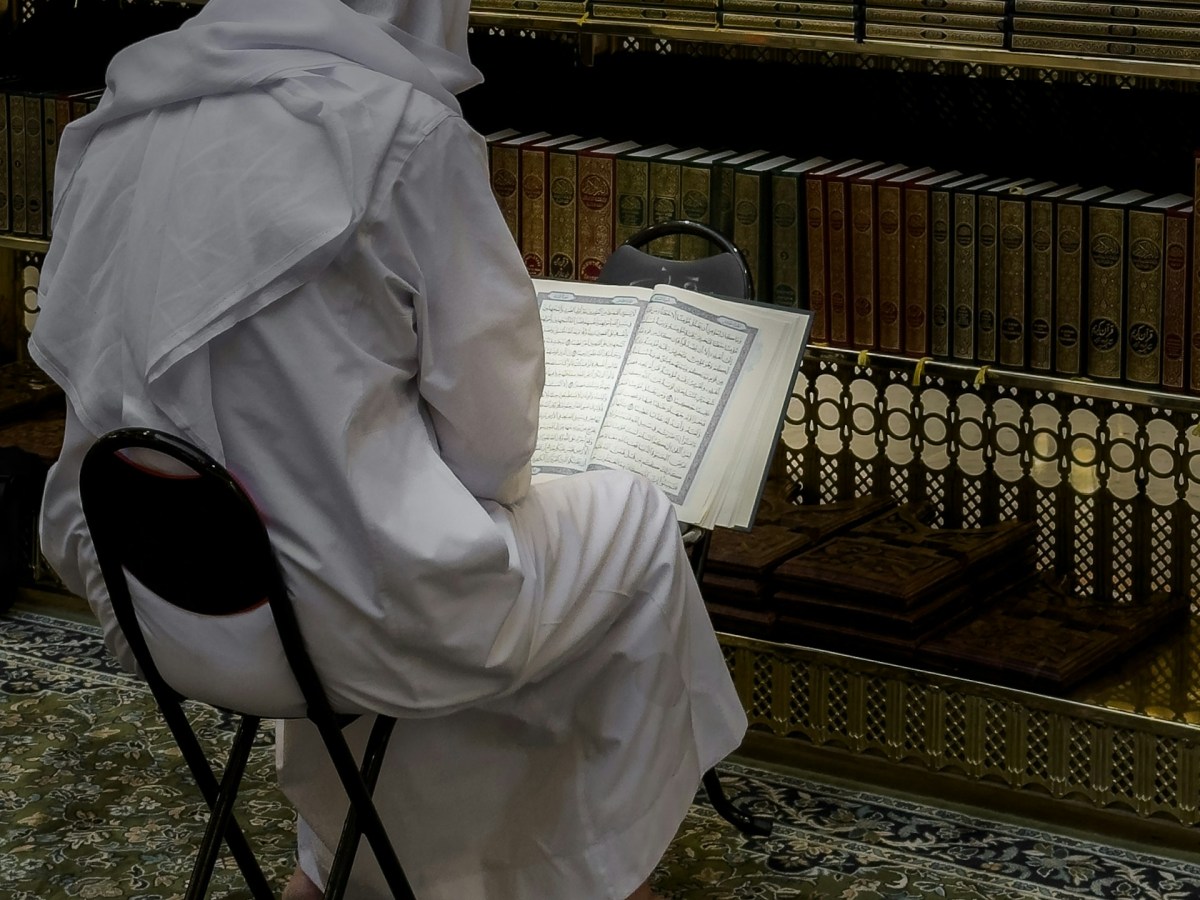
Featured photo is by Joanna Kosinska on Unsplash.
Please check out my first book on Amazon titled, Finding God in Organized Religion. It is the story of my life focusing on my involvement with three major denominations, from my childhood to present, describing the good and bad, and what I learned during the process. This link is for the Canadian Amazon marketplace. It is also on many other Amazon international marketplaces.
Latest blog posts:
Jesus: The Prophet Like Moses
Moses said, ‘The Lord God will raise up for you a prophet like me from your brothers. You will listen to him in everything that he says to you. And it will be that every…


Reasons for Christians to Celebrate Hanukkah
They sacrificed to the demons, not God,to gods whom they had not known,new gods who came from recent times;their ancestors had not known them. Deuteronomy 32:17 (LEB) The Greeks set up Asherah poles and sacrificed…

Dispensationalism Theology, Israel and You
And you will say, ‘I will go up against a land of open country; I will come to the people being at rest in safety, all of them dwelling without a wall and crossbars and…

Prophecy Fulfilled; And It’s Not Good
“Beware of false prophets who come to you in sheep’s clothing, but inside are ravenous wolves. You will recognize them by their fruits: they do not gather grapes from thorn bushes or figs from thistles,…

Testing the Spirits
And while he was still approaching, the demon threw him down and convulsed him. But Jesus rebuked the unclean spirit and healed the boy, and gave him back to his father. Luke 9:42 (LEB) What…

Did Jesus Hate the Pharisees?
But as for the cowards and unbelievers and detestable persons and murderers and sexually immoral people and sorcerers and idolaters and all liars, their share is in the lake that burns with fire and sulphur,…

Are We Really Robbing God or Just Getting Robbed?
All scripture is inspired by God and profitable for teaching, for reproof, for correction, for training in righteousness, in order that the person of God may be competent, equipped for every good work. 2 Timothy…
I was Raised a Christian-Zionist Nationalist- and Left
And then many will be led into sin and will betray one another and will hate one another, and many false prophets will appear and will deceive many, and because lawlessness will increase, the love…

Choosing Your Sins Carefully in 2025
And I brought them out from the land of Egypt, and I brought them to the desert, and I gave my statutes to them, and my regulations I made known to them, which, if a…

This is How it Works
Then Jesus said to him, “Put your sword back into its place! For all who take up the sword will die by the sword. Or do you think that I cannot call upon my Father,…

Today is the Day of Pentecost
Pentecost is a Greek term meaning “fifty”. Many churches are celebrating the day of Pentecost today, which in most cases is viewed as the start of the Church and the giving of the “Holy Ghost”.…
Imaginary Jesuses
Blessed are the ones who hunger and thirst for righteousness,because they will be satisfied. Matthew 5:6 (LEB) When Jesus delivered his famous sermon on the mount, one of his statements was “Blessed are the ones…
 Hear the Matter Proverbs 18:13