
If any man teach otherwise, and consent not to wholesome words, even the words of our Lord Jesus Christ, and to the doctrine which is according to godliness; He is proud, knowing nothing, but doting about questions and strifes of words, whereof cometh envy, strife, railings, evil surmisings, perverse disputings of men of corrupt minds, and destitute of the truth, supposing that gain is godliness: from such withdraw thyself.
1 Timothy 6:3–5 (KJV 1900)
Religion is an intellectual commitment to a set of beliefs or supreme being. There are thousands of Christian denominations, several Jewish belief systems, doctrines of Islam, such as Sunni and Shia, Buddhism, and all of the so-called cults that different religions identify as “heretical”. How do we know the truth? Is there truth, or is it just personal preference which god one serves? Who is it that has the knowledge to determine which sects are to be labelled cults?
During the late first century and early second century, there was a person called Marcion, who was considered a heretic by all of the early church fathers. They wrote volumes against Marcion. Marcion is credited with the terms “old” and “new” testaments. He believed the God of the “Old Testament” was a mean creator god with many laws, and Jesus came to free us from this law. Marcion believed that the apostle Paul’s teachings were the only valid doctrine for the Christian church to follow.
This belief system, deemed heretical by first century standards, sounds a lot like mid-Acts dispensationalism. Many Protestant churches follow some form of dispensationalism theology. Since each sect of Protestantism may mix and match the various forms of dispensationalism theology, I am going to generalize with some liberty. Here is a chart showing when the various forms of dispensationalism theology started.
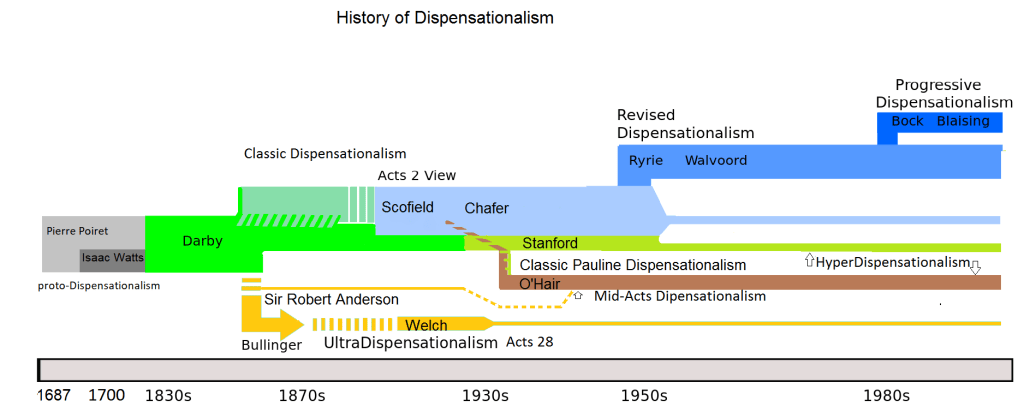
Pentecostals use dispensationalism for eschatology, and I would place the Pentecostal churches I have been involved with in the Acts 2 container of dispensationalism. Baptists would fall into the mid-Acts or Classic Pauline Dispensationalism with the exception of still requiring water baptism. Again, this is an over simplified, generalized explanation of some complex nuances of doctrine.
At the same time, there are many people involved in religion that do not even know where there beliefs originated or at what time in history they began. They appear to assume what they believe is what the New Testament churches believed simply because someone told them so.
There are many parts of dispensationalism that are very close to Marcionism, the first century belief system that early church fathers fought hard to dispute. Were they right in doing so, or was Marcion right? Most people today do not even know they are taking sides. “Ignorance is bliss”, so they say.
Some Protestants believe in replacement theology or supersessionism. This system believes the “church” has replaced Israel in the promises given to Israel and that Jesus invalidated the Old Testament law given to Moses by God. The church will experience the blessings intended for Israel in this belief system. I do not know anyone personally who believes this way today. Some of its deeply rooted tentacles still find their way into Christianity simply because “modern Christianity” was formed by replacement theology. The following is from https://www.khouse.org/articles/2020/1372/.
- Ignatius of Antioch (ca 50-117 AD) — Taught that those
who partake of the Passover are partakers with those who killed Jesus. - Justin Martyr (100-106 AD) — Claimed God’s covenant with Israel was no longer valid and that the Gentiles had replaced the Jews.
- Irenaeus (ca 130-202 AD) — Declared the Jews were disinherited from the grace of God.
- Tertullian (ca 155-230 AD) — Blamed the Jews for the death of Jesus and argued they had been rejected by God.
- Origen (185-254 AD) — He was responsible for much anti-Semitism, all of which was based on his assertion that the Jews were responsible for killing Jesus.
- The Council of Nicea (325 AD in Anatolia) — Prohibited Christians from sharing a meal with a Jew, marrying a Jew, blessing a Jew or observing the Sabbath. They changed the celebration of the Resurrection from the Jewish Feast of First Fruits to Easter in an attempt to disassociate it from Jewish feasts. The Council stated: “For it is unbecoming beyond measure that on this holiest of festivals we should follow the customs of the Jews. Henceforth let us have nothing in common with this odious people…” It decided that “the Sunday a week after the Sunday after Passover would be the official date, and that all celebrating on Passover would be considered anathema.” This is when the persecution of the Quartodecimans begins. The term “Quartodeciman” is Latin for “fourteeners“ and it referred to those that celebrated Passover on 14 Nisan.
- Eusebius (ca 275-339 AD) — Taught that the promises of Scripture were meant for the Gentiles and the curses were meant for the Jews. He asserted that the Church was the “true Israel.”
- Hilary of Poitiers (AD 291-371) wrote: “Jews are a perverse people accursed by God forever.”
- Gregory of Nyssa (died AD 394), Bishop of Cappadocia wrote: “the Jews are a brood of vipers, haters of goodness…”
- Jerome (AD 347-407) describes the Jews as “serpents, wearing the image of Judas, their psalms and prayers are the braying of donkeys.”
- Augustine (354-430 AD) — Asserted that the Jews deserved death but were destined to wander the earth to witness the victory of the Church over the synagogue.
- During the Middle Ages, Passion plays abounded and they were used to cultivate hatred toward the Jewish people.
- In 1478, Pope Sixtus IV granted the monarchs of Spain, Ferdinand and Isabella, the right to establish a special inquisition in Spain to deal with baptized Jews who were suspected of remaining faithful to Judaism. Thousands were burned at the stake by order of the Spanish Inquisition.
- In 1492, King Ferdinand decided that all Spanish Jews should be banned from Spain. It was feared that Jews were a danger to Christianity. Approximately 150,000 Jews were forced to leave Spain.
Commonwealth of Israel theology differs from dispensationalism and supersessionism, or replacement theology, because it teaches that all the promises to Israel still stand, and Jesus made a way to unite the gentiles and Jews as “one new man”. It is the prophecy of the two sticks being held in God’s hand representing the house of Israel and the house of Judah. The house of Israel, called Ephraim or the northern kingdom, was dispersed into the gentile nations. Jesus brought them back, formerly not a people, but now “the sons of the living God”.
Here is a chart from https://www.commonwealthofisrael.org/p/blog-page_81.html that summarizes these belief systems and their relationship to Biblical Israel.
COMPARISON OF THREE MAIN THEOLOGIES RE: ISRAEL & THE CHURCH
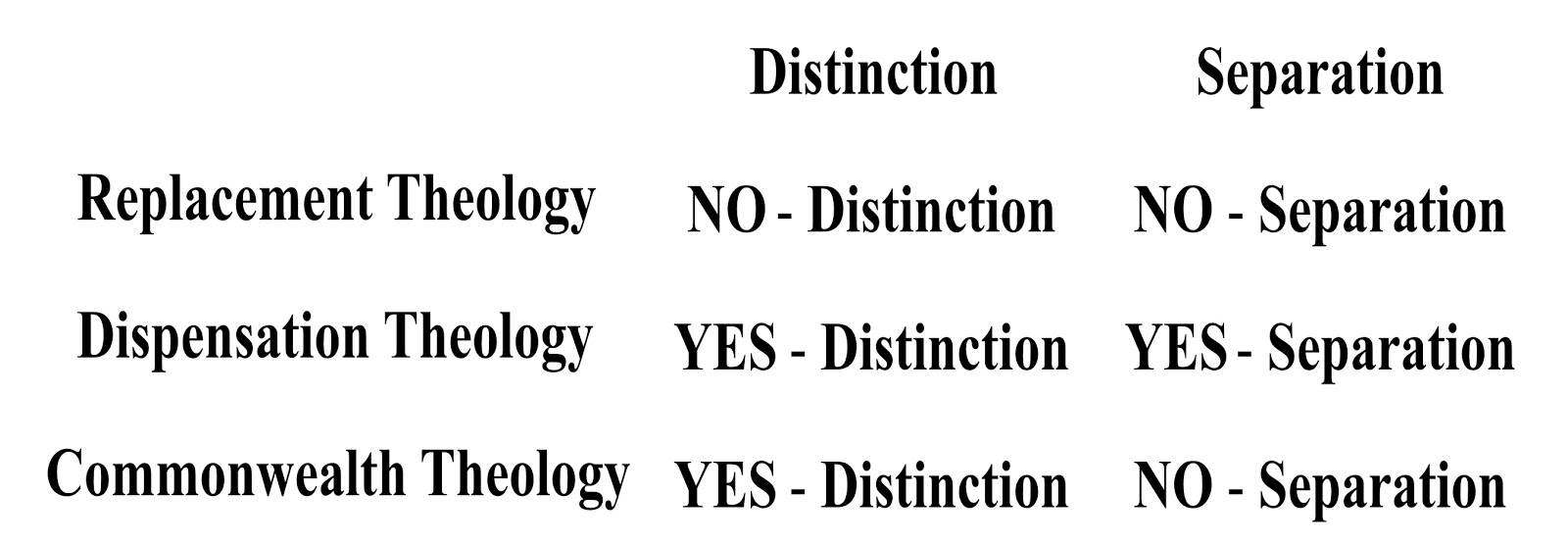
These are all accepted systems of theology in Christianity. I left dispensational theology and now favor Commonwealth of Israel theology. Does this mean I am in a cult? I don’t think so. I simply took the time to try to understand the different belief systems in Christianity. I always had a hard time reconciling dispensationalism theology whenever I studied the Bible. Sadly, not many people make the effort to understand their faith, belief systems, church history and inherited traditions. They simply accept whatever system they were raised in, or leave Christianity all together due to not being able to intellectually bare all of the inconsistencies in the different theological systems. Some simply “believe in Jeeesus”, as if he is their fairy godmother.
How do we label cults as compared to legitimate doctrine? It is complicated because everyone thinks their way is the only way. Some Protestants do not believe Catholics are saved and some Catholics think that their way is the one that is correct. There are Pentecostals who think they are the only people “going to heaven”, then there are Anglicans that believe everyone will “go to heaven”. Others do not believe anyone goes to heaven because in Revelation God makes a new heaven and earth and appears to bring new Jerusalem down to the new Earth.
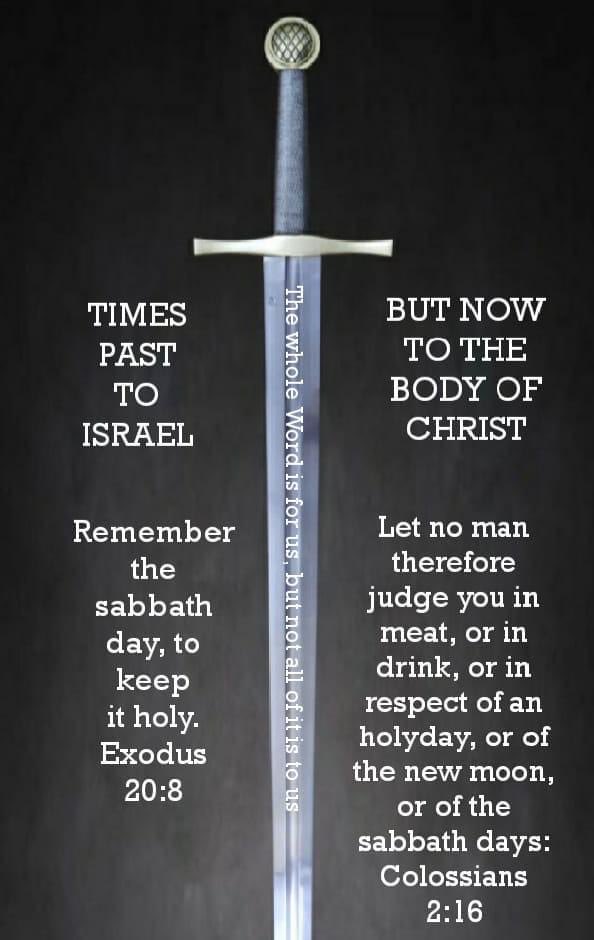
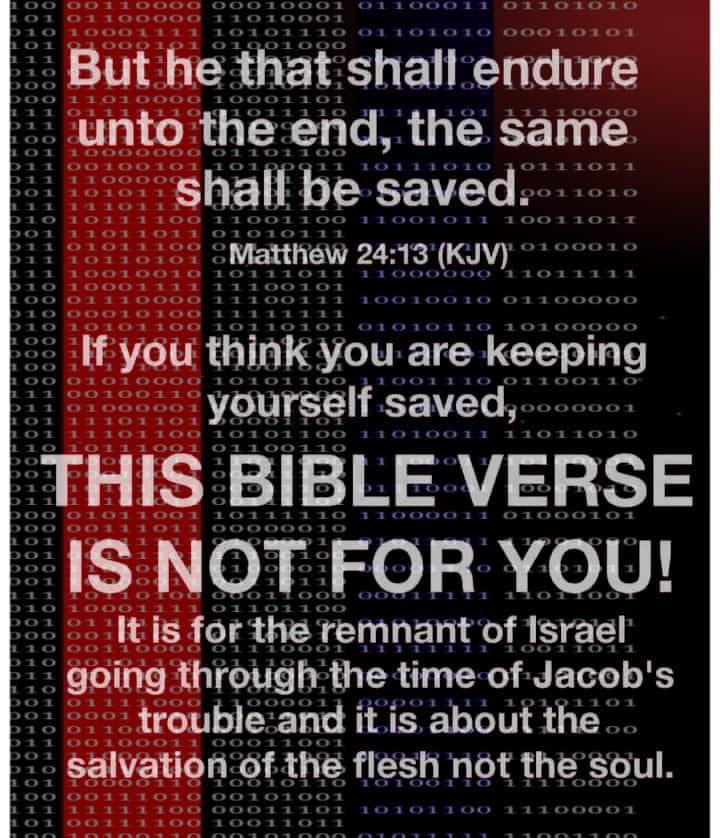
Here are some dispensational themed memes people share on X.
One of the doctrines that will put someone in the cult container is soul sleep. This is simply the belief that when we die we “rest in peace” until the resurrection. This is different than the more common belief that has some non-material part of our body fly up to heaven “to be with Jesus”, only to have to somehow reunite with their resurrected body at the resurrection.
Another doctrine assigned to cults is that of annihilation. This is the belief that mortals will be “annihilated” at the second resurrection instead of being tormented eternally in fire with the immortal demons and Satan.
The “trinity” doctrine is something one must uphold since the sixth century in order to not earn the cult label. I have a book called Encyclopedia of Cults and New Religions that labels the United Pentecostals as a cult because they supposedly do not believe in the trinity correctly.
Much of cult designations are subjective and soon everyone who believes differently becomes a cult member that must be feared. What if we did the hard work of understanding the different belief systems, discussing them in a civil manner and try to understand with the help of the Holy Spirit? Christians often are afraid to talk to someone who may believe differently for fear of being converted themselves. This simply means they are not sure of their faith enough to not be lured away.
God told Israel He would send false teachers as a test to see if the people cared enough about Him to do the work to be able to distinguish a false teacher. The definition of a false teacher to God was clear.
Deuteronomy 13:1–4 (LEB): “If a prophet stands up in your midst or a dreamer of dreams and he gives to you a sign or wonder, 2 and the sign or the wonder comes about that he spoke to you, saying, ‘Let us go after other gods (those whom you have not known), and let us serve them,’ 3 you must not listen to the words of that prophet or to that dreamer, for Yahweh your God is testing you to know whether you love Yahweh your God with all of your heart and with all of your inner self. 4 You shall go after Yahweh your God, and him you shall revere, and his commandment you shall keep, and to his voice you shall listen, and him you shall serve, and to him you shall hold fast.
Paul was not afraid of speaking to people with different belief systems and discussing them. Paul had the knowledge of scripture from being a Pharisee and an encounter with Jesus, an experience that emboldened him not to be afraid to talk to those in the pagan sex cults about his religion.
Acts 17:17–20 (LEB): 17 So he was discussing in the synagogue with the Jews and the God-fearing Gentiles, and in the marketplace every day with those who happened to be there. 18 And even some of the Epicurean and Stoic philosophers were conversing with him, and some were saying, “What does this babbler want to say?” But others said, “He appears to be a proclaimer of foreign deities,” because he was proclaiming the good news about Jesus and the resurrection. 19 And they took hold of him and brought him to the Areopagus, saying, “May we learn what is this new teaching being proclaimed by you? 20 For you are bringing some astonishing things to our ears. Therefore we want to know what these things mean.”
Paul would go to the synagogues and discuss Jesus and also talk about Jesus to Stoic philosophers, yet some Christians today fear discussing Jesus with those who believe the law of God is holy and good, such as people who believe Commonwealth of Israel theology. What about the Jehovah Witnesses? Should we fear them? That is what I was taught, however, I have come to believe we need to discuss our beliefs with them as Paul reasoned in the synagogues.
My family attended a Hanukkah special service last December at the local synagogue. I did this not because I want to convert to Judaism, but because it is what the Messiah did. If Paul could reason in the synagogues, why can’t I? Perhaps I could make a difference. Paul went to the synagogues after he had his “coming to Jesus” moment. He never went into a pagan temples.
If one studies historical Christianity, it is clear that Christianity today does not look anything like that of Christianity of the first century. Were they in error or are we? Who is allowed to decide? My litmus test is Deuteronomy 13. If someone is teaching that the ways of the Creator God of Abraham, Isaac and Jacob are wrong, then I will not follow their teaching. If someone denies that Jesus is the Messiah sent by God to save mankind, I will not listen to them either.
Photo by Possessed Photography on Unsplash
Please check out my first book on Amazon titled, Finding God in Organized Religion. It is the story of my life focusing on my involvement with three major denominations, from my childhood to present, describing the good and bad, and what I learned during the process. This link is for the Canadian Amazon marketplace. It is also on many other Amazon international marketplaces.
Latest blog posts:

Jesus: The Prophet Like Moses
Moses said, ‘The Lord God will raise up for you a prophet like me from your brothers. You will listen to him in everything that he says to you. And it will be that every…


Reasons for Christians to Celebrate Hanukkah
They sacrificed to the demons, not God,to gods whom they had not known,new gods who came from recent times;their ancestors had not known them. Deuteronomy 32:17 (LEB) The Greeks set up Asherah poles and sacrificed…

Dispensationalism Theology, Israel and You
And you will say, ‘I will go up against a land of open country; I will come to the people being at rest in safety, all of them dwelling without a wall and crossbars and…

Prophecy Fulfilled; And It’s Not Good
“Beware of false prophets who come to you in sheep’s clothing, but inside are ravenous wolves. You will recognize them by their fruits: they do not gather grapes from thorn bushes or figs from thistles,…

Testing the Spirits
And while he was still approaching, the demon threw him down and convulsed him. But Jesus rebuked the unclean spirit and healed the boy, and gave him back to his father. Luke 9:42 (LEB) What…

Did Jesus Hate the Pharisees?
But as for the cowards and unbelievers and detestable persons and murderers and sexually immoral people and sorcerers and idolaters and all liars, their share is in the lake that burns with fire and sulphur,…

Are We Really Robbing God or Just Getting Robbed?
All scripture is inspired by God and profitable for teaching, for reproof, for correction, for training in righteousness, in order that the person of God may be competent, equipped for every good work. 2 Timothy…
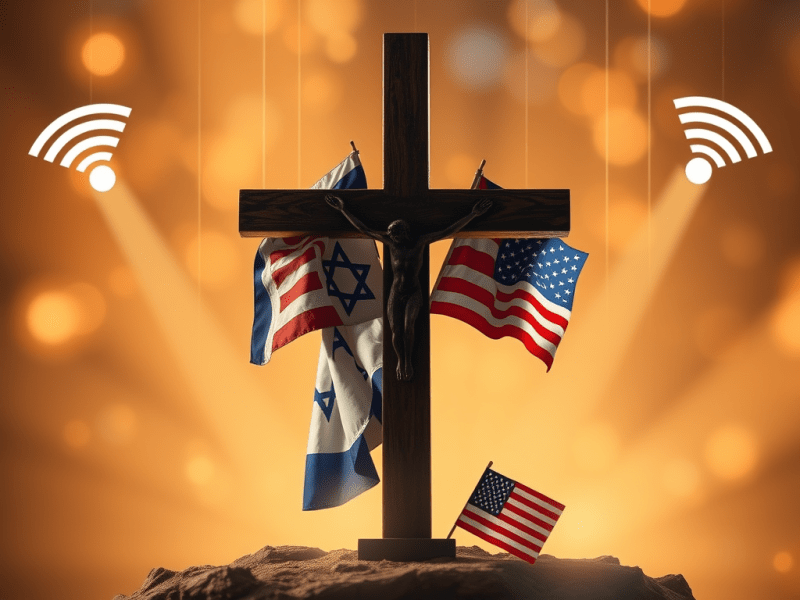
I was Raised a Christian-Zionist Nationalist- and Left
And then many will be led into sin and will betray one another and will hate one another, and many false prophets will appear and will deceive many, and because lawlessness will increase, the love…

Choosing Your Sins Carefully in 2025
And I brought them out from the land of Egypt, and I brought them to the desert, and I gave my statutes to them, and my regulations I made known to them, which, if a…

This is How it Works
Then Jesus said to him, “Put your sword back into its place! For all who take up the sword will die by the sword. Or do you think that I cannot call upon my Father,…

Today is the Day of Pentecost
Pentecost is a Greek term meaning “fifty”. Many churches are celebrating the day of Pentecost today, which in most cases is viewed as the start of the Church and the giving of the “Holy Ghost”.…

Imaginary Jesuses
Blessed are the ones who hunger and thirst for righteousness,because they will be satisfied. Matthew 5:6 (LEB) When Jesus delivered his famous sermon on the mount, one of his statements was “Blessed are the ones…
Please check out my first book on Amazon titled, Finding God in Organized Religion. It is the story of my life focusing on my involvement with three major denominations, from my childhood to present, describing the good and bad, and what I learned during the process. This link is for the Canadian Amazon marketplace. It is also on many other Amazon international marketplaces.
 Hear the Matter Proverbs 18:13